Coping with ADD/ADHD

coping-with-ADD-300x199.jpg

We know that living with a student who has ADD or ADHD can be frustrating at times, but learning coping mechanism and ways in which to channel all that energy into something positive will mean that you have a happier home and a student who stays ahead of the game academically. Here are some techniques you can use to help your student to excel.

Understanding your role

Students with ADD or ADHD have trouble with executive functioning. They are every bit as capable and intelligent as other students, but they have trouble planning ahead, seeing consequences, organizing, controlling impulses and completing the task at hand. This means you have to work with your in-home tutor and your teacher to provide guidance and take over these executive functions until your student learns the skills to be independent.

While they want to sit quietly in class, follow instructions and complete tasks, they need to acquire the tools to do so. They are rarely purposefully disruptive, but it’s important to recognize that they can be and manage the impact they have on parents, siblings and class members.

Stay positive and supportive

Remember that not being able to follow instructions or complete tasks can be just as frustrating for your student as it is for you. When you stay positive and calm, you will help them to build confidence and won’t make them think that they are always doing something wrong. Always remember that they are not being purposefully difficult and try to be supportive and encouraging.

Focus on the positive

Believe in your student and believe that they are capable of learning the skills they need to succeed. This will mean that you focus on the positive and don’t sweat the small stuff. When your student does three out of five of their chores, focus on the ones they did and praise them for those while gently reminding them of the ones they left out.

Create structure

Routines and structure will help your students to establish the tasks they need to do and the time they have to complete them. Establish a schedule for getting ready in the morning, doing homework and evening routines. Use clocks or timers to remind students of the time limits and to refocus them when their attention is diverted elsewhere. Keep routines as simple as possible.

Free time

Not every minute of every day should be structured. Allow your student some free time and their own space.

Activity

Physical activity helps students with ADHD and ADD to find a positive outlet for all their energy. Sports are a great way to get your students active and to allow them to rid themselves of all that energy.

Diet

Avoiding refined sugars and other processed foods will help your student to focus and to sleep better. Without the rush of too much sugar and with a good night’s sleep, they will be able to cope better.

Socializing

Encourage your students to make friends with their peers. Healthy social lives will help them to feel a sense of belonging and friends can provide support and encouragement.

Get involved

Every single student will thrive when their parents are involved in their lives and supportive of their academic and sporting endeavors. Keep in touch with your teachers and tutors to ensure that your student is progressing well and take an interest in them. Spend time with them and really listen to them.

Take care of yourself

Ensure that you have your own support network of friends and family members. You can also contact other parents who have students with ADD or ADHD and form a support group. Take time out and make sure that you get to focus on yourself from time to time. Happy parents make for far happier children.


How Creating the perfect homework station can improve academic performance for Highlands Ranch Students

Creating-a-homework-station-300x199.jpg

One way to avoid the daily struggle to get homework done and to help your student to improve their academic performance is to create a dedicated homework area. Here your student will be able to work in an atmosphere conducive to study and do their homework in a quiet, comfortable setting.

Elements of a good homework station

There are several factors that go into creating an environment conducive to study. The homework station should be quiet and out of the way of the general hustle and bustle of your home.

The homework area should have excellent lighting and an abundance of fresh air. If there is poor or stale air, fatigue and lack of concentration occur. Ensure that you clean out your HVAC filters every month to keep the air in your home fresh.

Reduce distractions by ensuring that there are no toys, pets, snacks and games nearby. The study station should only contain items pertaining to homework.

The homework area should be neat and organized with an abundance of stationary and everything your student needs for creativity.

Homework stations also have to be comfortable so ensure that your student has enough space and that the chair and table are at a comfortable height.

Tutor friendly homework spaces

If you have an in-home tutor, then the homework area should be big enough to accommodate your student and their one-on-one tutor. This reinforces the homework area as an academic space where positive, constructive work occurs.

The study station should be a quiet zone

The study station should be a dedicated area in your home where homework happens. When one of your students is in the study station, they are off limits to the rest of the family. Here they are not to be interrupted or distracted and should be left in peace.

Set homework times

Homework is best done when your students are refreshed and alert. The best time for this is usually after a short break when they have returned from school, but you and your students should work out a time that best suits your family schedule. Having a set homework time helps to establish a routine and reduces the incidence of incomplete homework.

Floral study friends

Studies show that indoor plants reduce stress, absorb sound and create fresh air. Placing a few pot plants around your student’s study area will help to create a positive atmosphere and provide a source of fresh air.

When planning and creating a study area, be sure to consult your student. Together you can create a space that best suits their study needs. Creating a space that is free from distractions and interruptions from siblings, phone calls and pets is a great way to encourage your students to complete homework tasks and study for exams.


DIY STEM Projects for Kids in Castle Rock

Tech_All_DIY-STEM-Projects-For-Kids-715x330.jpg

Like many of you, I recently bought bargain binders, dollar notebooks and other school supplies.  However, in the name of after-school enrichment at home and STEM (Science, Technology, Engineering and Math) projects, I also took advantage of seasonal sales to stock up on supplies for my makerspace.

Makerspace?

A makerspace is basically a spot where you make stuff. It could be an elaborate community creative space, an area in your basement or garage, or just a TV tray in a dedicated corner of your family room. I’m lucky to have a home that came with a well-worn workbench in the basement, the original man cave, if you will. But like a cave, the basement workshop is a dark, dank spot that isn’t much fun to hang out in, so it functions more as a storage area. The actual tinkering and creation of things tends to take place on my dining room table. Regardless of location and aesthetics, the making is more crucial than the space.

Making is not only a creative outlet but is also an activity that can build STEM knowledge, the most sought-after 21st-century skill set. Designing, measuring, building or even taking things apart helps developing minds enhance abilities in these critical areas.

Stocking Your Makerspace

  • Mark It — My boys were never big on traditional art supplies like crayons and paint, but your mileage may vary. To make markers more interesting, acquire a range of types like gel pens, permanent markers, spy pens or paint pens, taking care to note which ones may leave permanent stains.
  • Build, Baby, Build — Fill your space with inexpensive building materials:

Toothpicks

Straws

Wooden skewers

Popsicle® sticks

Drinking straws

Twist-ties

Chenille stems (formerly known as pipe cleaners)

Corks (go ahead, finish that bottle of winein the name of enriching your child’s education)

Tubes from toilet paper, wrapping paper and paper towels

Sturdy corrugated cardboard boxes, as well as chipboard from cereal and snack boxes, are like giant building blocks. They can also be cut, colored and otherwise manipulated to make new things. (http://cainesarcade.com/)

Finally, PVC piping and joints are another great resource for all kinds of fanciful inventions.

  • A Cut Above — Special scissors make special projects. Look for scissors that leave unique decorative marks like jagged edges, wavy edges and other intricate styles.
  • When Things Get Sticky — What my younger boy lacked in attraction to crayons he made up for in his love of tape. It started when he was in preschool and last year, as a seventh grader, he came home from school with an inventive sculpture created solely out of transparent tape (created during a few stolen moments in class, apparently). This is an amazing decade for tape. In addition to old standbys like masking, painter’s and transparent tape, there’s an explosion of decorative tapes on the market that can add a splash of special to any project. Even duct tape now comes in bright colors and fun patterns that have not gone unnoticed to makers. Loads of duct tape projects are just a click away.
  • Connect — Tape can also hold things together, as can paperclips and brads, those brass tack like objects that have two little legs or prongs and allow for motion between connected objects.  Twist-ties, chenille stems and magnets can also be used for this purpose. If your child can safely handle the heat, a hot glue gun really helps things stick together.
  • Electrify — Help your child dabble in electronics with basic supplies, such as button cell batteries, LED lights, battery leads and DC motors.

You might feel more comfortable with a starter kit that comes with suggested projects or a set like littleBits that enables kids without prior electronics experience to easily add sensors, lights and movement to maker projects. It’s worth noting that littleBits are also the most girl-friendly electronics I’ve come across to date.

If your children are ready to take their electronics to the next level, read up on things such as Arduino, theRaspberry Pi or the Makey-Makey, which makes anything into a keyboard. You can check out one of my younger teen’s projects here.

Did I miss anything? You might have noticed I didn’t mention glitter. It’s pretty much the only craft supply I ban from my house, and with two boys, I’ve never had anyone question my policy. What are your favorite maker supplies?

Kim Moldofsky started out as a dolphin trainer and later became a potty trainer. Now this leading Social Media Mom of two teen boys blogs hosts online chats and createsvideo content in addition to consulting and speaking at events.

Kim married her love of science and passion for blogging in 2012 by launching a blog reflecting her interest in STEM (Science, Technology, Engineering and Math). That blog, The Maker Mom, is dedicated to helping parents raise STEM-loving, Maker-friendly kids.


Kim-Moldofsky_avatar-170x170.jpg

Kim M started out as a dolphin trainer and later became a potty trainer. Now this leading Social Media Mom of two teen boys blogs hosts online chats and creates video content in addition to consulting and speaking at events.

Kim married her love of science and passion for blogging in 2012 by launching a blog reflecting her interest in STEM (Science, Technology, Engineering and Math). That blog, The Maker Mom, is dedicated to helping parents raise STEM-loving, Maker-friendly kids.

How to Help Your High School Student Set Goals

TutoringK12.com_goals.jpeg

To your teen, it might seem as if high school is going to last forever. But you know better. Setting goals provides your teens with concrete landmarks to help them along their academic path. Having set goals to follow will give your teens focus and help them build self-confidence.

Here’s a look at the kinds of goals your teen should be setting and why they are important.

  • Of Course Those Courses Matter. How can you help make your teen’s academic schedule beneficial to him or her? Keep your teen’s college and career goals in mind when choosing courses.
  • Think Ahead to Test Time. Tests are a fact of life for high school teens. Whether dealing with subject tests, mid-terms and finals, or standardized tests, your teen’s high school career will be peppered with test dates. Well ahead of test time, help your teen set up test preparation goals.
  • Extracurriculars Are Not Extraneous. Both colleges and employers think extracurricular activities are important because they showcase skills, commitment and responsibility. In addition, these activities benefit your teen by helping to build independence, confidence and experience. Sometimes, they even help your teen figure out a career path. As your teens set goals for the things they would like to achieve outside of school, help them keep their overall schedule in mind, as well as their college plans.
  • You Talking to Me? Have your teen talk to the school’s counselor. The counselor can help your teen select courses and narrow down college and career choices. Setting up goals with the counselor provides a clear framework that helps them keep things in focus.
  • Hello College, Here We Come! No matter which year of high school your teen is in, college visits should be on your goal list. Freshman year is not too soon to start looking at colleges. In fact, it’s much better to start early, and you can start locally. Visit different colleges of different sizes, with different kinds of campuses, if possible. Different campuses have different “feels” to them, and visiting will help your teen figure out which atmospheres are most appealing.
  • Face the Financial Facts. High school means study time for you too. Your goal during your teen’s high school years should be to learn about college costs. That includes learning about financial aid: how it works, what’s available and if your family qualifies for it. It also includes learning about the differences between loans, grants and scholarships. The earlier you learn the ins and outs, the better, because it’ll give you the opportunity to plan ahead. Then, you can sit down with your teen and have a frank discussion about the fiscal facts. Based on that discussion, you can help your teen set realistic college goals.

The more your teens set and meet goals, the more they will realize the benefits and importance of goal setting. How do you help your teens set goals and keep them on track for meeting their goals?


Teaching Responsibility: How to Help your Student to Take Charge

Teaching-Responsibility-300x198.jpg

Teaching your students to take responsibility for their learning and their actions is a great way to empower them and to motivate them. Being responsible isn’t something that comes naturally to most students and part of the reason for this is that those areas of the brain which deal with responsibility (frontal cortex) continue to grow and develop well into their early twenties. You can help them to take ownership of their actions and to think things through before acting with these simple techniques.

Instilling confidence

The first step in taking responsibility is for your students to believe that they are capable of making the right choices and of taking the lead. Start with baby steps; ask them how they are going to deal with a situation like an upcoming test or looking after a younger sibling.

Listen to their plan and discuss things that could go wrong and how to deal with possible problems. It’s best here to allow your student to come up with their own solutions; don’t be too prescriptive as to what they should do. Allowing them to formulate their own plans inspires confidence and giving them more responsibility shows that you have confidence in their abilities.

Dealing with failure

As students take on more responsibility with their studies and in other aspects of their lives, it’s inevitable that some glitches will occur. When this happens, try to remain calm and reflect on their actions, and the consequences of those actions.

When discussing failures, ask open ended-questions to allow students to arrive at their own conclusions. Taking responsibility means taking ownership of actions and consequences both good and bad. If you give your students responsibility, but keep taking the issue back or interfering, it will take them longer to assume responsibility.

Developing responsibility at home

Pets, chores and independence should be gradually introduced when your students are ready for them. As they learn to be responsible for all aspects of their lives, they will naturally assume responsibility for their academics too.

If you find yourself nagging them to do the things they know that they are responsible for, allowing them to fail occasionally and to deal with the consequences may inspire greater responsibility in the future.

Assuming academic responsibility

When students are struggling with academics, it may be time to set some goals that are realistic. Decide together on goals that for short term improvement and long-term achievement. Then set out a plan to accomplish those goals.

Get a tutor for students who have fallen behind, set a study schedule and suggest ways in which you can monitor their progress. Be involved, but don’t dictate; remember that they must be responsible for their own academic progress if they are really going to succeed.


Social Networks and Teens: A Parent's Guide

Social-Network-466x700.jpg

Social networks like Facebook have become so much a part of our culture that our teens may find it hard to believe that there was a time before the internet. As in all spheres of social life, there’s are dangers inherent in participating in social networking. Here is a guide to ensuring that your students stay safe on social networks.

Privacy and Trust

Don’t be offended if your teen rejects your friend request. Reading their social network sites is just like listening in on their phone conversations, reading their texts or peeking in their diaries. While students are entitled to a modicum of privacy and trust, you still have a responsibility to protect them. The internet provides a certain anonymity that means that people posing as their friends will have access to all their personal information.

Social networking sites are inevitable and crucial for the modern teen to effectively communicate with their friends. Sharing photos and videos inspires creativity and written communications improve their writing skills. Since your teen is going to be participating, it’s best to outline rules and guidelines to help them to safely navigate social networking sites.

Rules and Guidelines

Talk about which sites your students can belong to and set up your own account so you can familiarize yourself with the way in which the site works. Help your  student to set up the site (make sure that they are old enough to comply with the site’s age restrictions) and show them how the privacy settings work. Explain carefully to them why the privacy settings are important and regularly check that they have not been changed.

Make it a rule that your student doesn’t friend anyone that they haven’t already met in person and don’t know. You can even get younger students to check with you before they accept a friend request. Ensure that photos posted to ensure that they are appropriate and don’t reveal any information that could tell someone which school they attend or where they live.

Regularly Google your students to see what pictures and information are out there. Sometimes their friends may post personal information or pictures that you may not want online. Be vigilant and ask your student to show you what they have been up to online.

It is your responsibility to monitor the sites your students use and the information that they post. Set up guidelines and rules for internet use and be sure to discuss the consequences of posting inappropriate information or pictures. Discuss cyber bullying and how they should react if they receive any messages or posts that are offensive or hurtful. Ask the school for their policy on social bullying and discuss this with your student too.


Five best Board Games for Middle and High School Students

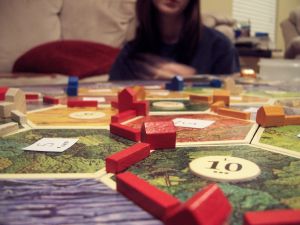
Board-Games1.jpg

Holidays can be long and when rainy days or long trips confine teens to the home, there are many games which can encourage them to spend some time with family members. This gives them a break from their computers and phones and gives you all an opportunity to have some family fun while learning.

Settlers of Catan

This board game is intense action mixed with resource management. Each game takes about an hour to play and can accommodate up to six players with an extension pack. Players must gain resources such as sheep, wheat, wood and brick to build settlements, armies and roads. This is a strategy game which teaches students to think ahead and use their resources and bargaining skills wisely. Settlers of Catan has been voted the best game of the year in the US and Europe. This game is very engaging and every game is completely different from the last.

Say Anything

This is an excellent way to get your teens talking and helps them to build social skills. Players will have to practice excellent communication skills to win and it helps you to get to know each other a little better. The game takes about 35 minutes to play and is easy to follow: 1) Ask a question from the card you draw. Some examples of questions include: “What’s the best movie of all time?” or “If I could have a BIG anything, what would it be?” 2) All the players write an answer and turn it face-up. 3) You choose which answer you like most (this is based on wit, style and accuracy). The players then try to guess which answer you picked. This is a great game for getting to know family members better and it.s fun to think of new and original answers to the questions.

Ticket to Ride

This game revolves around the adventures of Phileas Fogg and players must collect railway stations to connect routes around North America. The longer the route, the more points the player accumulates. Additional points can be accrued when you fulfill your Destination Tickets by connecting two distant cities. The player who builds the longest continuous railway also gets additional points. Games take 30-60 minutes to play and are a great way to inspire a love of travel and improve knowledge of North American geography.

Cranium

This is a great way for the whole family to play together because Cranium relies on a whole bunch of skills from general knowledge, humming tunes, charades and drawing to sculpting play dough. No matter the age of participants, they can all contribute to their teams with their own special talents. The fact that this game has so many different ways to answer a question keeps it fresh and exciting. Many questions are for team play which means all the teams get to participate, keeping the game fun and exciting.

Equate

This is Scrabble for math lovers. The board functions in much the same ways as Scrabble with tiles which contain numbers and equations. You can help students to improve math and especially algebra skills by playing this game. The board can accommodate 2-4 players from ages 8 and up.


5 Tips To Create The (Near) Perfect Homework Environment

Edu_Elem-and-Middle_Near-Perfect-Homework-Environment-715x330.jpg

The mind of a child is like a sponge. Children absorb what is around them. Sometimes this is good, and sometimes this is not so good. When children are learning and taking in everything around them, it is understandable that they need to have a near-perfect environment to have an optimal learning experience.

I use the phrase near-perfect environment because what may be the perfect environment for one child may not be the perfect environment for another child. We are all different people with different personalities and different learning styles. The following suggestions may be used in part or in whole. I’ve found these tips to be helpful in creating the near-perfect homework environment.

  • Create the atmosphere – Having a child who is very easily distracted has made us realize the importance of having an optimal homework environment. Our daughter has her own special homework space. It is a simple, well-lit area with no distractions. When she puts her head down to work, she is more inclined to “get in the zone.” There is no noise, no toys and no activities around her, which often translates into no homework problems.
  • Allow for space/breaks – When my daughter gets off the bus, she is DONE. She needs a break.  And why not? She has just completed a half-hour bus ride home and has had to stay focused all day at school. Our routine is to allow her to rest before she does anything. If she is rested, she is more inclined to stay focused and more likely to enjoy her homework. A rested brain means the brain is ready to work and is in “absorption” mode, not recovery-and-spent mode.
  • Make sure the child is well fed – Food is something we all need. Having a child who is well fed will help the child work better. The human body simply cannot function properly without proper nutrition. Healthy meals and snacks help a child’s learning go a long way.
  • Be organized  Being well organized is a sure way to have your child succeed in his or her studies. Have a homework caddy easily accessible so when the child is ready to start working, everything is ready to go, and there is no need to search for anything, which may cause a child to become distracted.
  • Be available – Children may not want an adult right next to them while they are working, but it is important for them to know that you are available if they need you. Using phrases like, “It looks like you have worked really hard on that sentence” instead of empty praise such as, “You are the best at writing sentences” will help them realize their work is important.

These are just a few tips to help you create the near-perfect homework environment for your child. Start with these tips, and then observe doing his or her homework. You may also want to spark up a casual conversation with your child about what he or she does and doesn’t like about homework. Based on the answers, try to accommodate, and make homework something your child enjoys. How do you keep your child focused on doing homework?

- Jody A

Helping Teens to Resist Peer Pressure

Resisting-Peer-Pressure.jpg

Peer pressure is tough for teens to deal with. While you can’t spare them from exposure to peer pressure, you can provide them with the skills to deal with it. Learning to deal with peer pressure will be an invaluable life skill for your teens to learn.

Why teens are less responsible

If you are frustrated that your teen doesn’t seem to think of the consequences of their actions, then you are not alone. Teens act in the heat of the moment for a very good reason; their prefrontal cortex has not completely developed. The prefrontal cortex is what we use to make responsible decisions and react in acceptable ways to peer pressure. From the US Department of health: “This brain region [prefrontal cortex] is responsible for cognitive analysis and abstract thought, and the moderation of “correct” behavior in social situations. The prefrontal cortex takes in information from all of the senses and orchestrates thoughts and actions to achieve specific goals. The prefrontal cortex is one of the last regions of the brain to reach maturation. This delay may help to explain why some adolescents act the way they do.”

While this medical fact does explain why teens take longer to be responsible, it doesn’t mean that they are incapable of thinking through their actions or considering the consequences. These are learned responses, so persevere in your attempts to instill a sense of responsibility and help your teens to consider the consequences of their actions for themselves and the people around them.

5-step method

Start by helping your teen to identify their physical and natural reactions or ‘gut’ feelings. When they feel anxious or uncomfortable about a suggestion that a friend or classmate proposes, they should take a minute to think before acting. Learning to identify these triggers will help them to institute their 5-step program. Giving your teens tangible steps to avoiding trouble in the future is far more likely to have a positive outcome.

  1. Count to 10: When a friend or classmate suggests something that your teen is not comfortable with, they should not answer right away but should take a minute to think about the idea before agreeing.
  2. Consider consequences: Teach your teen to ask themselves questions like: What could go wrong? Will this hurt anyone? How will this affect me and my loved ones?
  3. Suggest an alternative: Easier than refusing, suggesting a reasonable alternative will make it easier to switch the focus and move on to a less damaging activity.
  4. Say no: This is tough, but if all else fails, help your student to find the words they need to say no. Role-play different scenarios with them so that they are ready when these situations present themselves. When they do mess up, be understanding and discuss ways in which they could have extricated themselves from the situation without losing face. Remind them that standing up for themselves is far more likely to earn respect.
  5. Be the bad guy: Have a code word that your teen can text to you that tells you to call them. That way they can take a call from you and ask advice about situations that they are feeling uncomfortable about. You can also have a code word that lets you know they need help. You can pick them up and be the ‘bad guy’ while they save face with friends and avoid dangerous situations.

Follow us on twitter to get blog link updates - @tutordoc

How do I know I'm Not Failing as a Parent?

Parenting_All_Not-Failing-as-a-Parent-715x330.jpg

All parents ask themselves: I don’t want to fail my kids, how do I know I am a “good” parent? No parent will do everything well, and that’s OK. Focus on what you are doing well instead of where you think you are failing. If you are a parent who does each of these nine things listed below, you get a gold star. As for me, and most likely a lot of other parents, I do not excel at every one of these, and that’s OK!

  • I meet my child’s needs. My children have food to eat and a place to sleep, and they are loved. As basic as this sounds, providing these necessities helps me know that my children’s basic needs for childhood development are being met.
  • I help my child. It can be overwhelming when my child comes home with a project and needs to be able to name all the periodic elements or write an essay on the deepest lake in Guam. I know little about these topics, but I am there to help him through it. It can be overwhelming for my child, so I play it cool and learn something along with him.
  • I am present. I am in the school gymnasium for my child’s award for perfect attendance, at the soccer field for the soccer participant award and will be there to see him receive his Ph.D. I am present when I can be and proud of his accomplishments. My children will remember that I was present well into their adulthood and know I care.
  • I provide routine. Since my children were young, we’ve had routine in their lives. I know children need structure and routine to thrive. I have provided structure in our home from an early age, which will help them transition to school with little disturbance. My children feel safe in their predictability at home.
  • I am consistent. I am consistent and firm in the way I parent. I have realistic rules in our home and am able to enforce them. Being consistent from an early age helps my child feel secure.
  • I am a parent, not a friend. My child will have many friends over the course of his life, and I am their mom. My children need me for the roles their friends cannot fill. I’m happy to be that person.
  • I am involved. I know the people who are educating my children. I volunteer at their school and talk to their teachers. By being involved, I know what is happening in their world.
  • I know my child’s friends. “Show me a child’s friends, and I will show you their future.” I find much truth in this statement. I help my children to be aware of who their friends are and what a positive influence can mean in their lives.
  • I am not too hard on myself. I don’t have to be the June Cleaver of the 21st century. I look after myself and my children, and I can feel good about that.

Give yourself some credit and brag to us about what you are doing well as a parent.

-Jody A

The Highs and Lows of Report Card Day

Edu_All_Highs-and-Lows-of-Report-Card-Day-715x330.jpg

Your child’s first report card of the school year, and each one thereafter, can bring feelings of excitement, bliss and pride; it can also cause disappointment, frustration and concern. In either scenario, each reporting period is a time to reflect on the good, and/or not so good, and prepare your child for a fresh start! Here are some tips to get the conversation going:

  • Make it a game of high-low! Ask your kids what they feel is the “high” of their report cards, and let them know you are proud of their hard work. Secondly, ask what they feel is the “low” of their report card and have a discussion about how that grade was earned.Then discuss ways to improve on the “low.”
  • Talk to your kids about their work habits, goals and challenging subjects. From there, try setting short-term goals for the next quarter and long-term goals for the end of the school year.
  • Stay positive! Be careful not to overreact to low grades or grades you deem unacceptable. It can be damaging to children’s confidence and have adverse effects of improvement. Find something to praise, even if it is just perfect attendance or a small improvement in a certain area.
  • Have an open dialogue with your children and let them tell you how they think they did. This gives them an opportunity to be transparent and sets the tone for parents. By talking openly, you can identify the issues and determine the best steps to create solutions.

During report card time, the most important thing for parents to do is to keep the lines of communication open with your children, as well as their teachers, to create a plan to further your children’s academic success. Remember that a report card is only a snapshot of how your child is performing in school and does not speak to all of their potential. Progress is key, and if you keep that in mind, you will be able to offer the support your child needs to be successful in all of his or her academic endeavors.


Leave the Responsibility to the Kids

Momsense_MMojo_0916-715x330.jpg

Your kids are growing up right before your eyes, and although you don’t want to let your babies go, it may be time for them to transition from mama’s baby to mama’s big kid! Below are tips that will help you keep your sanity, and give your child responsibility and a boost of confidence.

Save yourself some time (and sanity) by letting your little ones help pack their lunch at night. See how Not your Average Mom does it.

Clean up time can be a task, especially since kids and mess go hand in hand, but you can make cleaning up a breeze by making it fun.

This list of age appropriate chores will help you decide what tasks your children can handle.

Now, do you pay or not pay kids for chores? Read both sides of the debate here.

Great tips


How to Get Kids To Open Up About Their Day

Edu_All_Get-Kids-to-Open-Up-About-Their-Day-715x330.jpg

All parents know that at the end of the day the last thing their children want to do is talk about their day at school. However, it’s important for parents to know what their kids are doing at school and how they feel about school. It’s also important for kids to talk about their day and share their feelings. These tips can help you get your kids to open up about their school day.

  • Avoid asking “How was school today?”— If you want to start a conversation, quit asking this boring and expected question. Ask more specific questions, such as “Who did you sit with at lunch today?” These types of questions will help your children focus on one aspect of their day, rather than their day as a whole.
  • Use Artwork or Schoolwork as Conversation Starters— When kids bring home their masterpieces from art class or a completed assignment, take the time to look them over and make observations about them to your child. Simple comments or questions will encourage your child to share more details with you.
  • Talk About Your Day— Do you want to hear what your child’s favorite part of his or her day was? Start by talking about your day and modeling what you want to hear. After hearing your stories, your child will better be able to relate to you and share a similar story.
  • Stop to Actually Listen— It’s important to actually put everything else aside to listen to your child without any distractions. Stop cleaning the dishes and sit down with your child to have a real one-on-one conversation. This time will show your children that what they are saying is important to you. When you’re not distracted, you will also be more aware of your children’s feelings and how they really feel about school, giving you the chance to extend the conversation and dialogue.
  • Stay In-the-Know— Read the school newsletters and everything else your children bring home from school. Stay updated on what’s going on in their daily lives and what’s on their schedules. Being involved will help you better understand your child’s life and therefore help you stay connected to your child.

Each child is different and will respond in different ways. Learn what helps your children open up and what causes them to shut down. When does your child talk the most about his or her day, and how do you fuel the conversation?